Receiving & storage
The receiving point and hopper or bunker arrangement are selected around delivery method, storage and fuel consumption.
Automatic biomass fuel feeding for compatible manually fired boilers and heaters. The arrangement is selected around fuel type, consumption, boiler layout and the required level of automation.
Enquire about this product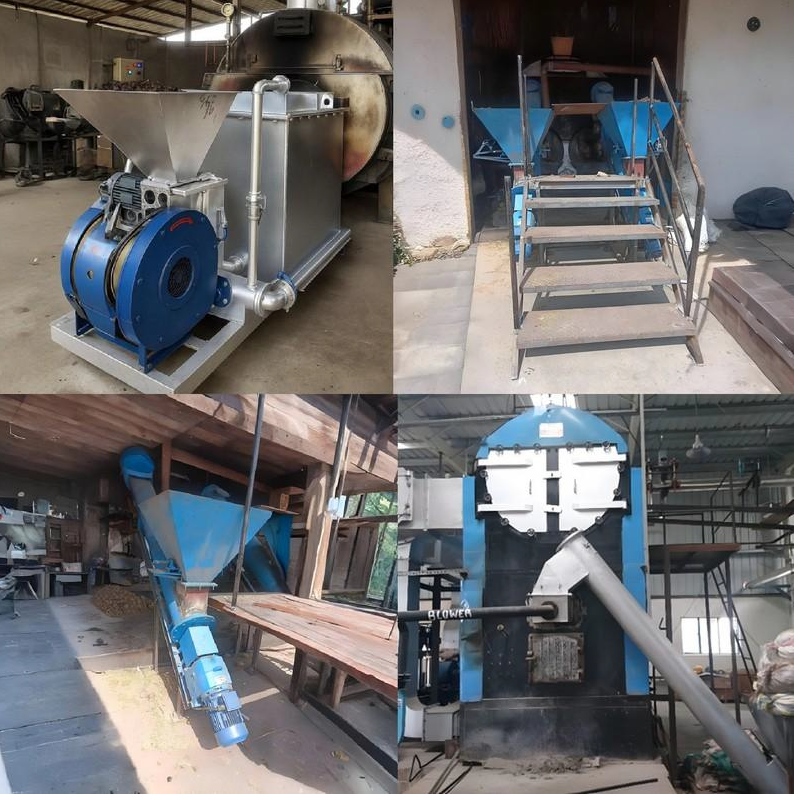
These details are drawn from Dhruv Bio Energy's supplied company documents. Confirm the latest specification and project fit with our team.
We review your equipment, fuel and operating conditions to discuss a suitable configuration.
Explore related servicesTypical elements considered during engineering. The quotation defines which items are included, their ratings and the site interfaces.
The receiving point and hopper or bunker arrangement are selected around delivery method, storage and fuel consumption.
Screw feeders or an appropriate transfer system move fuel from storage towards the boiler. The layout depends on fuel properties and the site.
Size reduction or separation is assessed where the delivered fuel does not match the selected feed system. It is not required in every package.
A suitable feeder controls delivery to the combustion system. Feed-rate selection is based on fuel consumption, not boiler steam output alone.
Feed control and protective interfaces are coordinated with the furnace and existing operating controls.
Cleaning, inspection and material-handling access are considered before the layout is finalised.
A system overview to help you discuss the right arrangement with our team.
Confirm fuel format, delivery point and storage needs.
The selected transfer arrangement carries fuel to the metering point.
Fuel delivery is coordinated with the combustion system and operating load.
Check feed consistency, useful output and total operating cost during the agreed assessment.
Start with your boiler size, fuel and available space. These details help us select a suitable feeding arrangement.
We select the feeding arrangement to match your boiler capacity, fuel consumption and operating requirements.
Biomass fuels differ in size, energy content and bulk density. We assess whether crushing or other preparation is needed before selecting the hopper, conveyor and feeder.
Controlled fuel delivery can help maintain steadier combustion and reduce irregularities caused by manual feeding. Actual improvement depends on the fuel, boiler condition and operating practices.
Compact layouts may suit an inclined screw feeder, while sites with sufficient height may accommodate a bucket elevator and overhead bunker. The final arrangement considers storage, access and maintenance space.
Boiler type and capacity; fuel type, size and quality; normal and peak consumption in kg/h; operating hours; available floor space and shed height.
Photos or a layout should show storage, transfer route, boiler entry point and maintenance access. Include existing controls, electrical supply and the automation required.
Open a question below. For advice on your plant, share your requirements with our team.
Share the boiler type, capacity, current feeding method and layout. We check fuel demand and available space before suggesting an arrangement.
No. Feeding rate is the weight of fuel delivered per hour; boiler capacity is steam output. Fuel quality and boiler performance determine the required feed rate.
No. Fuel size, transfer height and the layout decide which components are needed. The quotation lists the actual equipment included.
Yes. Automatic feeding can reduce manual fuel handling, but the boiler still needs supervision, checks, cleaning and an agreed ash-handling arrangement.